Journalism they say is "literature written in a hurry". The comment is attributed to British poet and cultural critic Mathew Arnold. It takes a bit of research to find out that there are doubts as to whether the 19th Century sage writer really made the comments attributed to him.
Irrespective of whether Arnold made these comments or not, there is a qualitative difference between journalism and serious academic and reflective writing. When I joined the Press Trust of India (PTI) in Delhi, one of the editors, Arun Kumar told us that the language used in news reports should be such so as to make it clear and interesting even to a person travelling in a crowded train in Mumbai.
Do clarity and making things interesting oversimplify the subject?
I have no clue and there are differences in opinion on this. After having spent two decades in journalism, it seems that journalists generally are in the habit of thinking very high of themselves. Does this sense of self-importance evolve from their intellectual prowess or their ability to grasp and analyse very quickly or efficiency to simplify things or for going places and rubbing shoulders with the powerful?
Again, I don't have any definite answer, but a good friend of mine from my school and college days who was also my colleague briefly in a newspaper once jocularly retorted that "we reporters are nothing but a bit more respected porters." The comment made in lighter vain was not intended to depict any disrespect for those who serve the society by carrying out heavy and difficult manual jobs with ease and efficiency but only to self-asses a profession one was in.
When I first joined journalism by chance, a few years after my friend did, I was inclined to be a reporter as well. It was not only because of a desire to have many bylines - as it is the usual practice that reporters get bylines and the sub-editors and others at the news desk do a thankless job and lead a life in anonymity - but also to be known by the people, develop contacts and be visible. This visibility, which initially makes one proud gradually gets transformed into a form of self-proclaimed power, often demonstrated by throwing one's own professional lot even to get personal things done without caring about their legal, ethical and moral implications.
It's not the reporter alone who is to be blamed. There are stories galore to prove that officials and those who matter succumb to someone flaunting his or her press card rather than attending a genuine cause. Such is the power of the media that even people with enormous influence believe that it can make and unmake careers. This power, if any, flows from the social perception that the media contributes hugely to build or break much sought after fame. In my journalistic career, I have come across many instances when people were right but floundered because the media portrayed the wrong thing.
It is this perception that is trying to paint a picture of Prime Minister Narendra Modi being suspiciously silent about his plans and actions. Many are apprehensive that the man, who is perceived to be divisive, is silently executing his game plan, others think that once on the hot seat he is bewildered and doesn't know how to cope.
While it is the job of the journalists to be inquisitive, ask questions and reflect not only public opinion but also collective queries of the society, but the silence of the prime minister is increasingly making the media restive. Dr Manmohan Singh was also a man of few words, but the silence of someone known for his forceful articulation stuffed with conviction like Modi had bewildered the journalistic fraternity and his political opponents alike.
It is as if Modi is following in word and spirit the old adage that we have been taught in childhood - which says, the more you speak the more lapses you make and the more flaws you show. While political adversaries can't wait to find Modi on the wrong foot, the restlessness of the scribes emanates from a multiplicity of reasons.
Firstly, those sympathetic to the cause of the BJP in general and Modi in particular, and vociferously articulated their views from long before the general elections were expecting to be rewarded. Secondly, those who want to be close to the establishment irrespective of political and ideological affiliations to have a share of the goodies are desperate to start a channel of communication with the new prime minister and people close to him. Thirdly, those who are antagonistic towards the cause of the BJP and Modi want to put the prime minister under intense scrutiny and that is not possible without the Gujarat strongman being forthcoming in his interactions with the media.
The way in which Modi has shunned many publicity temptations has kept the media and various other operators wondering as to how to get closer to him and rub shoulders with people who matter. After all, being close and friendly with the powerful often serves a form of clientelism which is important in an age of crony capitalism.
From an etymological point of view, the primary work of a journalist is to collect information, verify and inform the consumers of news in a palatable way. The restlessness of the journalists following Modi's enigmatic silence is not so much for not being able to serve the consumers of news and more for being left out of the power matrix. Like many other operators, journalists who stroll in the corridors of power develop stakes and it is by no means easy to let it go by.
An academic friend of mine who is sympathetic to journalists is however, more generous in his views. He takes resort to the classical definition of civil society being an intermediary between the state and the individual. Journalists being part of the broader definition of civil society, my friend thinks that it's only fair that they try to build a bridge with the omnipotent Narendra Modi.
After all the significance of proximity can't be overlooked in defining power relations and influence flows from the omnipotent to those close to him or her.
Tirthankar Bandyopadhyay is a journalist and media consultant.
He can be contacted at tirthankarb@hotmail.com
All comments are personal.

Saturday
'What's left of the Left'
A friend who went to St Xavier's College with me in
Kolkata thought, ‘good, bad or ugly’, India desperately needed a change. She wants to see
Narendra Modi’s ‘numerically emphatic victory’ as the causal effect of India’s
national aspiration for change. Now based in the US, I could see that she had
shed her sympathy for the Left, which was so common among college-going youths
of the 80s and 90s in Kolkata.
 |
| The Left no longer stokes public imagination as it used to for years after Indian independence |
A Bangalore-based techie, who spent over five years
in school with me, openly aspired and vehemently argued for a Modi government at
the Centre. Surprised by the intensity of his argument and strength of his conviction,
I was tempted to ask how his father - a veteran journalist, writer with strong
Left leaning – felt about this change in stance within the family! My
friend wasn’t apologetic, instead he underlined the fact that “these are two
generations representing different times in history”.
Narratives like these are helpful in understanding
popular discourses which shape socio-political landscapes. It becomes all the
more interesting when viewed from a distance so as not to be overwhelmed by
proximity to the very moment in time and the object of analysis.
The decline of the Left is a fact of life not only
within the geographical confines of India but across the globe. However, that doesn’t in anyway imply the decimation of the voices of protest and dissent which are so closely related to the politico-philosophical
ideology of the Left. A friend once told me, “The official Left makes way for the multi-headed
heterodox Left.”
His words sounded paradoxical then, but being a
bystander to the global upheavals at multiple levels of society one can easily
infer that socio-historic perspectives do make a difference. Not that people
necessarily analyse and act, but circumstances make them think in a definite way.
The demise of the ‘nation state’ as a dominant discourse and the rise of
‘neo-liberalism’ as an economic doctrine played catalysts to the so called socio-historic
transformation and India is no different.
The weakening of the ‘nation state’ as a fall out of
the decline in Keynesianism has withered those institutions – like the public
sector, bodies upholding public and social consumption etc. - which projected
the dominance of ideologies that for years have been the hallmark of the Left
and trademark of the essence of the Congress.
There is no denying the fact that economic
liberalisation was initiated by a Congress government in 1991 and the process in
fact, had started even before, probably during the later years of Indira Gandhi
government in the early 80s, but we had been witness to an ongoing ideological
and emotional tussle between the socialistically-inclined segment of the Congress
and its liberalising counterpart. Whenever the party was in trouble it took no
time to swing back to its ‘ex-reform’ agenda.
Similar was the case with the Left. Apart from the
crises emanating from the electoral arithmetic since 2008, the Left was
virtually hitting its head on the wall as politics as a manifestation of strong
ideological and moral compulsion took a backseat following the emergence of
‘neo-liberalism’ as a dominant doctrine.
 |
| Mamata Banerjee and her Trinamool Congress party decimated the Left in its bastion |
If globalisation contributed to expansive
capitalism, neo-liberalism as a doctrine single-handedly ensured that politics
was no longer string-tied to ideology and became a function of ‘service
provision and clientelism’. The symptoms were evident in West Bengal, once the
citadel of the Left. The old war horses and foot soldiers of an ideology,
many of whom spent their whole lives dreaming of and aspiring to bring about
social change were replaced by clients or beneficiaries of such a long Left
regime. These elements - heterogeneously composed of promoters, primary school
teachers, owners of rice mills and brick kilns, small traders etc. - backed
successive Left governments to ensure nothing but self-interests. That they are
not tied to any ideological or moral baggage is evident from the fact that some
of these elements quickly changed camps since the inauguration of a new Trinamool
Congress government.
The failure of the Left was not necessarily because
it allowed itself to be swamped by opportunists and hoodlums – which come with
any government, but for its failure to recognise that the lexicon of the
dominant political discourse had changed. Even when it recognised what was
lacking, the Left leadership failed to capitalise because of a short span of
time and they were not convinced whether their corrective course of action was
in right direction. Hence the party apparatus and the electorate were not
readied for a paradigm shift in policy and thinking.
The euphoria of being in power for such a long time
in Bengal, actually resulted in a sense of complacency, restraining an already
dogmatic Left leadership to peep out of the window and see for themselves how
the world had changed, even though it was palpable to those who moved out of
the geographical confines of Bengal.
The stimulants of change were in the air, as some
medical practitioner would refer to here in the West in case a patient was
suffering from flu (popularly known as Influenza in India), but the Left
leadership failed to acknowledge them. Instead, they continued to harp on ‘old
politics’ - characterised by stoking fear and insecurity, treating people as faceless numbers - as depicted
in their voter identity cards, denying the minimum dignity that a person is
entitled to, and sermonising the electorate rather than interacting with them
with due respect to their level of
knowledge and enlightenment.
In fact, during the just concluded parliamentary
elections, the strategy of the Left in West Bengal was confined to ‘negativism’
- based on their hope to encash on splitting of votes between the Trinamool
Congress, Congress and the BJP – and ‘hopeless campaign’ which relied more on
ridiculing political opponents rather than putting forward a ‘sense of hope’ - pre-dominant
in a neo-liberal set up as it empathised with individualism.
What then happens to the organic relationship that exists between
the Left and voices of dissent ?
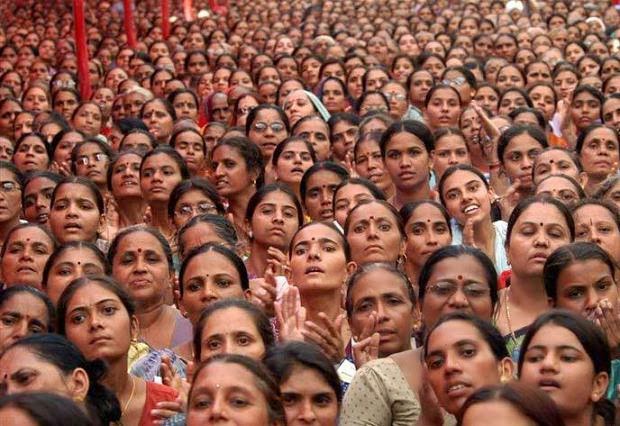 |
| Social movements now play a crucial role in airing voices of dissent |
No one expects the dissenting voices to subside with
the decline of the mainstream parties to the Left of India’s political
spectrum. More than anything else, the social movements and in some cases the
civil society organisations are playing the role of the Left. Not that there is
complete coherence in their policies and courses of actions, but some sort of
rhizomic (ginger-like, i.e. if one cuts a slice of ginger and plants it, the
slice grows like an independent rhizome but with all the traits of the mother
ginger plant) relationship exists between various social movements.
The Aam
Aadmi Party is a classic example as to how civil society organisations can
outgrow themselves from being the intermediaries between the state and the individual
to emerge as independent political formations, performing the role of the ‘social Left’. Moreover, some political figures like Mamata
Banerjee and Nitish Kumar will try to play the ‘moral Left’ leave aside the
various radical, non-state Left actors like the Maoists.
It's not the prerogative of an analyst or an observer to speculate the future, but all said and done, it seems that probably the institutional Left has exhausted its role in Indian polity.
A version of this article is published in the Financial Chronicle: "Left is dead, long live the Left"
A version of this article is published in the Financial Chronicle: "Left is dead, long live the Left"
Tirthankar Bandyopadhyay is a journalist and media consultant.
He can be contacted at tirthankarb@hotmail.com Twitter handle: @tirthankarb
All comments are personal.
Thursday
Why should I pay for the BBC
Every time there is a news on proposed job cuts in the BBC, it is seen as an onslaught on objective journalism. However, other media organsations in Britain are not so lucky, irrespective of their level of honesty, objectivity and commitment to the trade.
I really don't understand what the fuss is all about!
If every other organisation can shrink and face cuts why can't the BBC? After all, the days of ceremonial institutionalism are over and the moot question is what impact does the BBC have in determining my news agenda of the day?
If the answer is 'NO', which is what is expected in this cut throat age of social media, then the justification of continuing to fund a monolithic organisation run by public money is obviously questionable, even if it raises a debate on objective journalism
Those who know me may find this selfish as only 18 months ago I was earning my living from the BBC. My caveat should also make it clear that I was also instrumental in protesting against job cuts at the World Service and elsewhere in the BBC as an active member of the National Union of Journalists (NUJ) since 2003. While being appreciative of individual agonies, insecurities and anxieties involving job cuts, I also acknowledge that life is not only a bundle of emotions and reality is often harsher than one expects it to be. Especially, when there are allegations that institutional failings and managerial flaws in the BBC are resulting in wastage of public money.
A dispassionate assessment of the role played by the BBC in figuring out the daily news agenda in the contemporary would show that when compression of time and space is the norm of the day, BBC finds it self-gratifying to be a glorious second or a third, with its 'impeccable' objectivity, when in reality there is nothing of that sort.
In fact, objectivity is determined by the perspective and the context within which it is situated. And neutrality is very much an idealistic concept and hence misfit in this age of 'post-ideology'. Here I am pretending to be a devil's advocate as to many consumers of news BBC has never been neutral or objective.
For example, a piece of news involving an attack on Israeli institutions may be objective for Tel Aviv, but alleged attackers in Gaza Strip may argue that their action is only a retaliation of perceived "occupation" of the Palestinian area. This is only an example and can be extrapolated to many other areas around the world. In fact, terms like 'objectivity', 'neutrality' and 'freedom' are contested concepts in a globalised set up.
BBC has often enjoyed patronisation from elites and middle class, especially in those countries who have shared history of colonial past, including the United Kingdom, not necessarily because of any high standard of journalism but more so as it played the role of an effective propaganda machinery for British and Western interests, which in some cases also contributed to primitive accumulation often by coercive means, and furthered colonial ideas even in a post-colonial era.
Even then there are some justifications for the BBC to continue as a British news outlet, but it has practically no role in the global space. Like many other things, the significance of news and the credence of its delivery are determined by the influence the provider enjoys. When the United Kingdom has lost out in today's geopolitics, the influence of the BBC is nothing more than being ceremonial, basking on past glory, if there is any, than looking forward to the future.
In that sense, the Global News Division of the BBC and the World Service should face any further cut ahead of any other department in the organisation. Any licence fee payer is within his or her rights to ask as to why they should pay for the information on what's happening elsewhere in the world, when there might not be any interest about it in the first place, or even if any then it could be gathered from many other sources. The golden two-source rule followed by the BBC internally can help any consumer of news to crowd out unreliable sources of information.
The notion of hierarchicalism, which is intrinsically linked to colonialism, will however, guide the masters of the BBC to flaunt triumphalism on the global stage, even when they know for sure that the plot is long lost.
Tirthankar Bandyopadhyay is a journalist, media commentator and media consultant.
He can be contacted at tirthankarb@hotmail.com
Twitter Handle: @tirthankarb
All comments are personal.
I really don't understand what the fuss is all about!
If every other organisation can shrink and face cuts why can't the BBC? After all, the days of ceremonial institutionalism are over and the moot question is what impact does the BBC have in determining my news agenda of the day?
 |
| Objectivity, neutrality and freedom are contested concepts in a globalised set up |
Those who know me may find this selfish as only 18 months ago I was earning my living from the BBC. My caveat should also make it clear that I was also instrumental in protesting against job cuts at the World Service and elsewhere in the BBC as an active member of the National Union of Journalists (NUJ) since 2003. While being appreciative of individual agonies, insecurities and anxieties involving job cuts, I also acknowledge that life is not only a bundle of emotions and reality is often harsher than one expects it to be. Especially, when there are allegations that institutional failings and managerial flaws in the BBC are resulting in wastage of public money.
A dispassionate assessment of the role played by the BBC in figuring out the daily news agenda in the contemporary would show that when compression of time and space is the norm of the day, BBC finds it self-gratifying to be a glorious second or a third, with its 'impeccable' objectivity, when in reality there is nothing of that sort.
In fact, objectivity is determined by the perspective and the context within which it is situated. And neutrality is very much an idealistic concept and hence misfit in this age of 'post-ideology'. Here I am pretending to be a devil's advocate as to many consumers of news BBC has never been neutral or objective.
For example, a piece of news involving an attack on Israeli institutions may be objective for Tel Aviv, but alleged attackers in Gaza Strip may argue that their action is only a retaliation of perceived "occupation" of the Palestinian area. This is only an example and can be extrapolated to many other areas around the world. In fact, terms like 'objectivity', 'neutrality' and 'freedom' are contested concepts in a globalised set up.
BBC has often enjoyed patronisation from elites and middle class, especially in those countries who have shared history of colonial past, including the United Kingdom, not necessarily because of any high standard of journalism but more so as it played the role of an effective propaganda machinery for British and Western interests, which in some cases also contributed to primitive accumulation often by coercive means, and furthered colonial ideas even in a post-colonial era.
Even then there are some justifications for the BBC to continue as a British news outlet, but it has practically no role in the global space. Like many other things, the significance of news and the credence of its delivery are determined by the influence the provider enjoys. When the United Kingdom has lost out in today's geopolitics, the influence of the BBC is nothing more than being ceremonial, basking on past glory, if there is any, than looking forward to the future.
In that sense, the Global News Division of the BBC and the World Service should face any further cut ahead of any other department in the organisation. Any licence fee payer is within his or her rights to ask as to why they should pay for the information on what's happening elsewhere in the world, when there might not be any interest about it in the first place, or even if any then it could be gathered from many other sources. The golden two-source rule followed by the BBC internally can help any consumer of news to crowd out unreliable sources of information.
The notion of hierarchicalism, which is intrinsically linked to colonialism, will however, guide the masters of the BBC to flaunt triumphalism on the global stage, even when they know for sure that the plot is long lost.
Tirthankar Bandyopadhyay is a journalist, media commentator and media consultant.
He can be contacted at tirthankarb@hotmail.com
Twitter Handle: @tirthankarb
All comments are personal.
Monday
A difficult bridge to cross
Smarties are my long-time favourite. Dripping my mouth with vanilla-flavoured smarties at McDonald's in Slough this afternoon, I was actually gulping emotions. The good thing about vanilla-flavoured ice cream is that it never interferes with your taste, keeps your throat moist so that you can intake a big serving, be it of emotions.
A whole host of stories indeed made me emotional, Mukesh Ambani taking over TV18, Shekhar Gupta leaving Indian Express after a span of 19 years. The grapevine is that Shekhar is taking over the reins at India Today and an unapologetic rightist Swapan Dasgupta to don the mantle at Indian Express.
These things are not uncommon after change in governments, especially after such widespread transformation in the country's political landscape. Yet every time they take place the air is filled with grapevine and whispers.
The Vodka served at the Delhi Press Club doesn't taste that sober. At least, it didn't in December 2003, when I was there to cover an election. No wonder, some journalists quickly lose their sobriety. Rumours fly thick and fast and one is tempted to make up the matrix of what they want to hear.
Shekhar, along with Prannoy Roy and Dorab Sopariwala were at their obedient best when talking to Amit Shah even before the Lok Sabha results were out. Barkha Dutt, whom I fancy calling the Kate Winslet of Indian journalism, was modesty personified with the BJP strongman. At least, by then the results were declared and India's fate for the next five years was eminent.
Prannoy is a smart operator. Probably the smartest in India's contemporary media circles. But what happens to the Sardesais? Will Rajdeep stop shouting at the top of his voice at 'India@9'! Will Sagarika be forced to praise the Ambanis!
Few years back, Bhaskar Ghose was our guest in Bush House. The proud father, father-in law was filled with no less pride as a grandfather. With an effusive smile he would say, how he enjoys baby-sitting Rajdeep and Sagarika's kids.
I was annoyed when Shekhar literally bent himself to please Amit Shah, but today his parting shot from the Express made my eyes moist. After all, we all survive because of our survival instincts. He will move from the Express Building at Bahadur Shah Zafar Marg, near ITO for those who are not conversant with Delhi's geo-political nerve centre, to the India Today office! Is it at Noida!
There was a time when Express Building was indeed the nerve centre of India's political journalism, if not Indian politics. I once had an opportunity to visit the building and it didn't seem anything extraordinaire. It was just after I had quit my job with the Financial Express in Kolkata. The idea was to collect my dues so as to meet my expenses during months of unemployment. Probably, Vivek Goenka was still not in command then.
If I am not mistaken, Vivek and his brother Santosh are Xavierians from Sahibganj, the school I had gone till I was in Class Four. One of my uncle's few claims to fame was that he taught the Goenka brothers. He would spare no effort to flaunt it.
Kolkata has been much more stagnant when it comes to journalistic mobility, yet rumours fly with equal agility like it does in Delhi and Mumbai. Claims and counter claims on the pecuniary benefits on offers and not professional excellence draw and redraw the contours of a journalist's career.
Television channels are up shots now, and their presenters and reporters nouveau-stars, yet none can deny their democratisation effect. Journalism is no longer confined to the rich, powerful, wealthy and the well read, but like always they often attach greater self-importance than is due to them.
Twenty-one years ago, on a June afternoon like today, I indulged in my journalistic journey at the St Xavier's College in Kolkata, where veteran journalist and senior editor Niranjan Sengupta taught a motley group of aspirants a few nuances of journalism. Since then, despite the best of efforts to whole-heartedly quit, I have been tied tightly with this profession.
After completing 20 years in journalism, of which 14 years with the BBC, I thought of quitting in 2012, and starting afresh with a new career. But that was not to be.
Probably, Niranjan Babu was right!
"It's difficult to get into journalism, but it's even more difficult to leave," he once told me.
Quitting journalism is like crossing a bridge, which one can try to the best of efforts but never accomplish completely !
Tirthankar Bandyopadhyay is a journalist and media consultant.
He can be contacted at tirthankarb@hotmail.com
Twitter Handle: @tirthankarb
All comments are personal.
A whole host of stories indeed made me emotional, Mukesh Ambani taking over TV18, Shekhar Gupta leaving Indian Express after a span of 19 years. The grapevine is that Shekhar is taking over the reins at India Today and an unapologetic rightist Swapan Dasgupta to don the mantle at Indian Express.
These things are not uncommon after change in governments, especially after such widespread transformation in the country's political landscape. Yet every time they take place the air is filled with grapevine and whispers.
The Vodka served at the Delhi Press Club doesn't taste that sober. At least, it didn't in December 2003, when I was there to cover an election. No wonder, some journalists quickly lose their sobriety. Rumours fly thick and fast and one is tempted to make up the matrix of what they want to hear.
Shekhar, along with Prannoy Roy and Dorab Sopariwala were at their obedient best when talking to Amit Shah even before the Lok Sabha results were out. Barkha Dutt, whom I fancy calling the Kate Winslet of Indian journalism, was modesty personified with the BJP strongman. At least, by then the results were declared and India's fate for the next five years was eminent.
Prannoy is a smart operator. Probably the smartest in India's contemporary media circles. But what happens to the Sardesais? Will Rajdeep stop shouting at the top of his voice at 'India@9'! Will Sagarika be forced to praise the Ambanis!
Few years back, Bhaskar Ghose was our guest in Bush House. The proud father, father-in law was filled with no less pride as a grandfather. With an effusive smile he would say, how he enjoys baby-sitting Rajdeep and Sagarika's kids.
I was annoyed when Shekhar literally bent himself to please Amit Shah, but today his parting shot from the Express made my eyes moist. After all, we all survive because of our survival instincts. He will move from the Express Building at Bahadur Shah Zafar Marg, near ITO for those who are not conversant with Delhi's geo-political nerve centre, to the India Today office! Is it at Noida!
There was a time when Express Building was indeed the nerve centre of India's political journalism, if not Indian politics. I once had an opportunity to visit the building and it didn't seem anything extraordinaire. It was just after I had quit my job with the Financial Express in Kolkata. The idea was to collect my dues so as to meet my expenses during months of unemployment. Probably, Vivek Goenka was still not in command then.
If I am not mistaken, Vivek and his brother Santosh are Xavierians from Sahibganj, the school I had gone till I was in Class Four. One of my uncle's few claims to fame was that he taught the Goenka brothers. He would spare no effort to flaunt it.
Kolkata has been much more stagnant when it comes to journalistic mobility, yet rumours fly with equal agility like it does in Delhi and Mumbai. Claims and counter claims on the pecuniary benefits on offers and not professional excellence draw and redraw the contours of a journalist's career.
Television channels are up shots now, and their presenters and reporters nouveau-stars, yet none can deny their democratisation effect. Journalism is no longer confined to the rich, powerful, wealthy and the well read, but like always they often attach greater self-importance than is due to them.
Twenty-one years ago, on a June afternoon like today, I indulged in my journalistic journey at the St Xavier's College in Kolkata, where veteran journalist and senior editor Niranjan Sengupta taught a motley group of aspirants a few nuances of journalism. Since then, despite the best of efforts to whole-heartedly quit, I have been tied tightly with this profession.
After completing 20 years in journalism, of which 14 years with the BBC, I thought of quitting in 2012, and starting afresh with a new career. But that was not to be.
Probably, Niranjan Babu was right!
"It's difficult to get into journalism, but it's even more difficult to leave," he once told me.
Quitting journalism is like crossing a bridge, which one can try to the best of efforts but never accomplish completely !
Tirthankar Bandyopadhyay is a journalist and media consultant.
He can be contacted at tirthankarb@hotmail.com
Twitter Handle: @tirthankarb
All comments are personal.
My heart goes out to Rahul Gandhi
Dear Rahul,
You must be terribly disappointed by the disastrous performance of the Indian National Congress, and more so because the party leaders are not allowing you to shoulder moral responsibility for the failure and quit the job you so distaste.
 I know how it feels to do a job one hates and still remain captive to the self interests of a bunch of selfish politicians, who are self-centered and without an iota of self-respect to say the least.
I understand, you are also a prisoner of your family's self-indulged tradition of being the custodian of the Congress party and will probably lead it till the time the party exists.
We are almost of the same age, and yet you have to bear the burden of such high expectations, trauma, personal loss, ridicule, and what not. Sometimes I feel how lucky I am.
I was very close to my grandfather, and when he passed away, I was just over nine. Although it was a natural death at a reasonable age during that time, the pain of the loss left me blank for months. But my agony was no match compared to what you had to undergo when Indira Gandhi was assassinated.
It was in the height of summer in 1991 and preparations for my Economics Honours examination kept me awake till very late in night. So when my father woke me up very early next morning, I was angry. Little did I know that by then Rajiv Gandhi's body was ripped apart beyond recognition.
No matter what the world thought about him, Rajiv Gandhi was your father, who held you in his arms, cuddled you, taught you how to walk, responded to your babble and inspired you to dream big to fulfill your aspirations.
When everybody, including me, were competing to find the choicest of words to undermine and ridicule you, it struck me, why the whole world is against someone who probably didn't even aspire to be a politician. Why everyone is baying for your blood when you didn't want to lead the Congress party and leadership was thrust upon a reluctant politician only to protect the interests of a bunch of Congressmen, whose only ambition was to use you to satisfy their greed for power.
You know Rahul, I was a lot luckier. When the norm of our time in a middle class family was to encourage boys and girls to go for Medical or Engineering, even if they had no penchant for it, my parents didn't force me to do so. The day, I failed to decipher how a Barlow's Wheel operates, I knew Engineering or Physics were not for me. I had a liking not to study the human anatomy but expressions and manifestations of their social behaviour and my parents readily agreed to live with it. I performed badly in my Higher Secondary examination, opted for a year's gap during my graduation and never gave my Master's in Economics the seriousness it deserved, yet my parents never questioned my wishes, because they loved me and were ready to do anything to make me happy.
Your were not so lucky Rahul neither was your dad. Rajiv Gandhi wanted to have a private life in the company of his wife, son and daughter and see their dreams come true, but was thrust upon into the murky world of politics. You know why! Only to protect a bunch of politicians, who camouflaged their self-interest with that of India. Your parents always feared that Rajiv Gandhi might be killed one day or the other, but they were left with no option.
 These were the same leaders who didn't spare your mother. Even before the period of private mourning was over, they flocked together to force her to take up the post of prime minister in 1991. It's not only that they lacked self respect and dignity but wanted a fall guy who would bear the brunt of being in power.
After the first United Progressive Alliance (UPA) came to power in 2004, I was a tad disappointed with your mother's conduct, given that she was not only the president of the Congress party but was also yours and Priyanka's mum. She allowed the Congress to ally with the DMK of M Karunanidhi, Samajwadi Party of Mulayam Singh Yadav, took support from the CPIM of Jyoti Basu and Harkishen Singh Surjeet, and didn't turn down an offer of friendship from a cunning V P Singh. These were the leaders who one day went around the country campaigning: "Gali Gali mey shor hai Rajiv Gandhi chor hay" (meaning the lanes and by-lanes of India are filled with slogans that Rajiv Gandhi was a thief). I still believe the vitriolic campaign collectively unleashed by them contributed to a sense of national hatred that culminated in the tragic killing of your father.
Anguished, I wrote a letter to her, questioning the decision to ally. She didn't shy away from responding, as most politicians in India do, but described 'threat to secularism' as the moral obligation. I was not convinced then, neither am I now. She was trapped, coaxed and cajoled by willy politicians. It's the same politicians who rejected your offer to resign. They did it not because they love and respect you or the Nehru-Gandhi family, but because they want you to be the fall guy as they made hay.
Rahul, when I was pondering over quitting my job in the BBC after nearly 14 years, I was terribly shakened and literally didn't know what to do. Then my father told me, "if you are passionate about what you do and listen to your heart nothing can stop you."
I wish I could put my arm on your shoulder and say, "Rahul do what your heart says."
Hope you find solace, joy and freedom in what you do in the future.
(A copy of this letter is being sent to Rahul Gandhi)
Tirthankar Bandyopadhyay is a journalist and media consultant.
He can be contacted at tirthankarb@hotmail.com
All comments are personal.
You must be terribly disappointed by the disastrous performance of the Indian National Congress, and more so because the party leaders are not allowing you to shoulder moral responsibility for the failure and quit the job you so distaste.
I understand, you are also a prisoner of your family's self-indulged tradition of being the custodian of the Congress party and will probably lead it till the time the party exists.
We are almost of the same age, and yet you have to bear the burden of such high expectations, trauma, personal loss, ridicule, and what not. Sometimes I feel how lucky I am.
I was very close to my grandfather, and when he passed away, I was just over nine. Although it was a natural death at a reasonable age during that time, the pain of the loss left me blank for months. But my agony was no match compared to what you had to undergo when Indira Gandhi was assassinated.
It was in the height of summer in 1991 and preparations for my Economics Honours examination kept me awake till very late in night. So when my father woke me up very early next morning, I was angry. Little did I know that by then Rajiv Gandhi's body was ripped apart beyond recognition.
No matter what the world thought about him, Rajiv Gandhi was your father, who held you in his arms, cuddled you, taught you how to walk, responded to your babble and inspired you to dream big to fulfill your aspirations.
When everybody, including me, were competing to find the choicest of words to undermine and ridicule you, it struck me, why the whole world is against someone who probably didn't even aspire to be a politician. Why everyone is baying for your blood when you didn't want to lead the Congress party and leadership was thrust upon a reluctant politician only to protect the interests of a bunch of Congressmen, whose only ambition was to use you to satisfy their greed for power.
 |
| Pic: Courtesy Indian Express |
Your were not so lucky Rahul neither was your dad. Rajiv Gandhi wanted to have a private life in the company of his wife, son and daughter and see their dreams come true, but was thrust upon into the murky world of politics. You know why! Only to protect a bunch of politicians, who camouflaged their self-interest with that of India. Your parents always feared that Rajiv Gandhi might be killed one day or the other, but they were left with no option.
These were the same leaders who didn't spare your mother. Even before the period of private mourning was over, they flocked together to force her to take up the post of prime minister in 1991. It's not only that they lacked self respect and dignity but wanted a fall guy who would bear the brunt of being in power.After the first United Progressive Alliance (UPA) came to power in 2004, I was a tad disappointed with your mother's conduct, given that she was not only the president of the Congress party but was also yours and Priyanka's mum. She allowed the Congress to ally with the DMK of M Karunanidhi, Samajwadi Party of Mulayam Singh Yadav, took support from the CPIM of Jyoti Basu and Harkishen Singh Surjeet, and didn't turn down an offer of friendship from a cunning V P Singh. These were the leaders who one day went around the country campaigning: "Gali Gali mey shor hai Rajiv Gandhi chor hay" (meaning the lanes and by-lanes of India are filled with slogans that Rajiv Gandhi was a thief). I still believe the vitriolic campaign collectively unleashed by them contributed to a sense of national hatred that culminated in the tragic killing of your father.
Anguished, I wrote a letter to her, questioning the decision to ally. She didn't shy away from responding, as most politicians in India do, but described 'threat to secularism' as the moral obligation. I was not convinced then, neither am I now. She was trapped, coaxed and cajoled by willy politicians. It's the same politicians who rejected your offer to resign. They did it not because they love and respect you or the Nehru-Gandhi family, but because they want you to be the fall guy as they made hay.
Rahul, when I was pondering over quitting my job in the BBC after nearly 14 years, I was terribly shakened and literally didn't know what to do. Then my father told me, "if you are passionate about what you do and listen to your heart nothing can stop you."
I wish I could put my arm on your shoulder and say, "Rahul do what your heart says."
Hope you find solace, joy and freedom in what you do in the future.
(A copy of this letter is being sent to Rahul Gandhi)
Tirthankar Bandyopadhyay is a journalist and media consultant.
He can be contacted at tirthankarb@hotmail.com
All comments are personal.
Subscribe to:
Posts (Atom)